Nature has had billions of years to experiment, and the results are stranger than anything a screenwriter could pitch. For every familiar dog, cat, or sparrow, there is a creature out there that looks like it wandered in from another planet, evolved a survival trick that sounds fictional, or simply broke the rules everyone else seems to follow.
Here is a tour through some of the strangest animals actually living on Earth right now, and the bizarre evolutionary reasoning behind each one.
The Axolotl: The Animal That Refuses to Grow Up
The axolotl looks less like an amphibian and more like a cartoon character, complete with a permanent smile and feathery pink gills sprouting from the sides of its head. What makes it genuinely strange is not just its appearance but its biology. Most salamanders go through metamorphosis, losing their gills and moving onto land as adults. The axolotl mostly skips that step entirely, staying in its juvenile, aquatic form for its whole life, gills and all.
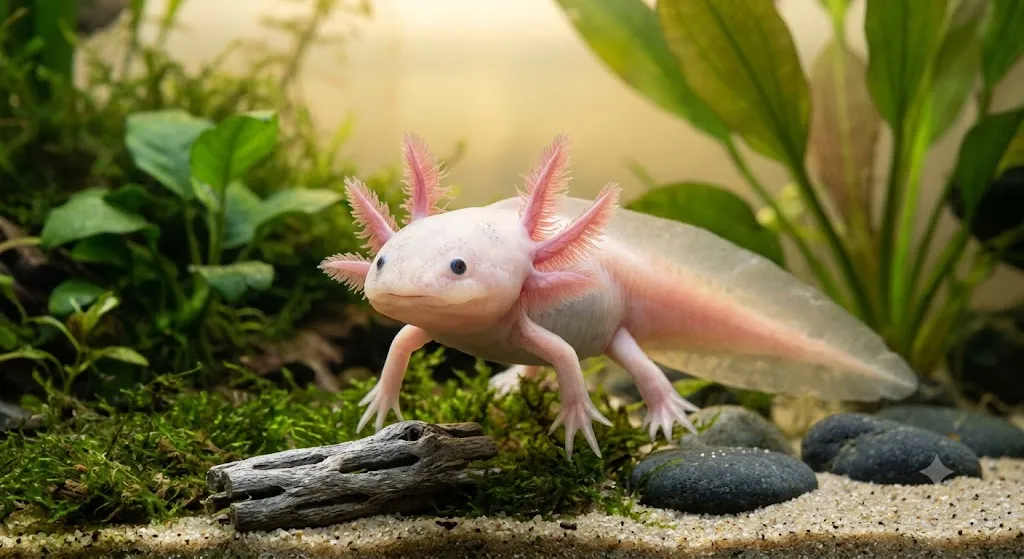
Even stranger is its regenerative ability. An axolotl can regrow an entire lost limb, complete with bone, muscle, and nerves, and can do the same with parts of its spinal cord, heart, and even portions of its brain. Scientists studying regenerative medicine have taken a serious interest in exactly how this animal pulls that off, hoping some of it might eventually translate to human medicine.
The Aye-Aye: Nature’s Unsettling Toolkit
Found only in Madagascar, the aye-aye is a nocturnal primate with enormous eyes, bat-like ears, and one deeply unsettling feature: an extremely thin, elongated middle finger that looks almost skeletal. That finger is not just for show. The aye-aye taps on tree bark with it, listening for hollow spaces that indicate insect larvae hiding inside, then uses that same thin finger to fish the grub out like a built-in tool.
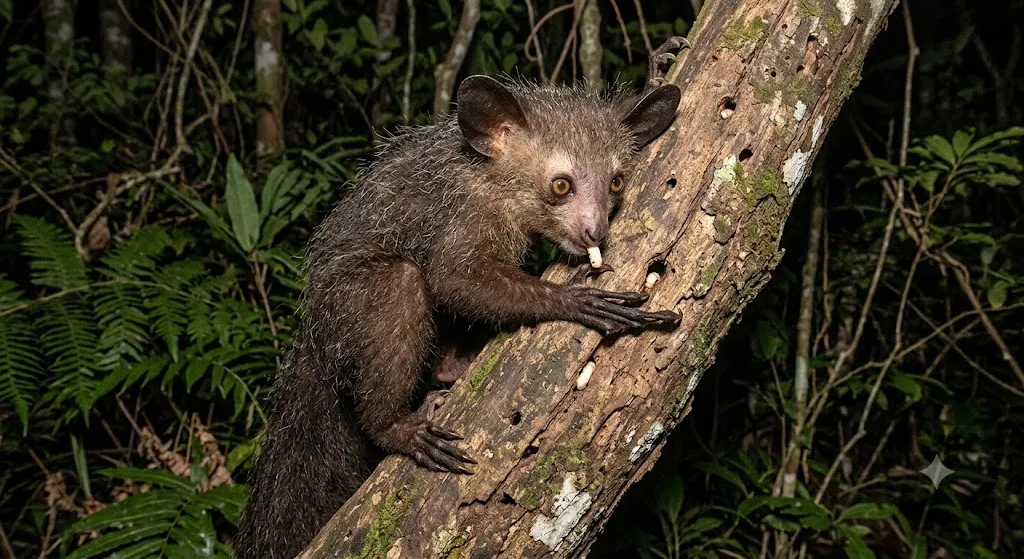
Local folklore in parts of Madagascar has long treated the aye-aye as an omen of bad luck, partly due to its unusual appearance, which historically put the species at real risk from people who killed it out of superstition rather than any actual threat it posed.
The Blobfish: Famous for the Wrong Reason
The blobfish became an internet punchline years ago, usually shown as a droopy, gelatinous, vaguely sad-looking creature. What most people do not realize is that the viral blobfish photo shows the animal after it has been hauled up from the deep sea, where the sudden pressure change causes its body to deform dramatically.
In its natural deep-water habitat, the blobfish actually looks like a fairly ordinary fish. Its body is adapted to survive extreme pressure at depths that would crush most other fish, using a gelatinous tissue that is slightly less dense than water instead of the muscle and bone structure most fish rely on, allowing it to float just above the seafloor with minimal energy expenditure.
The Naked Mole Rat: Biology’s Rule Breaker
The naked mole rat looks like a wrinkled, hairless rodent that skipped a few evolutionary steps, and its biology is arguably even stranger than its appearance. It lives almost its entire life underground in complex tunnel systems, organized in a social structure closer to a bee colony than a typical mammal group, complete with a single breeding queen and worker roles.
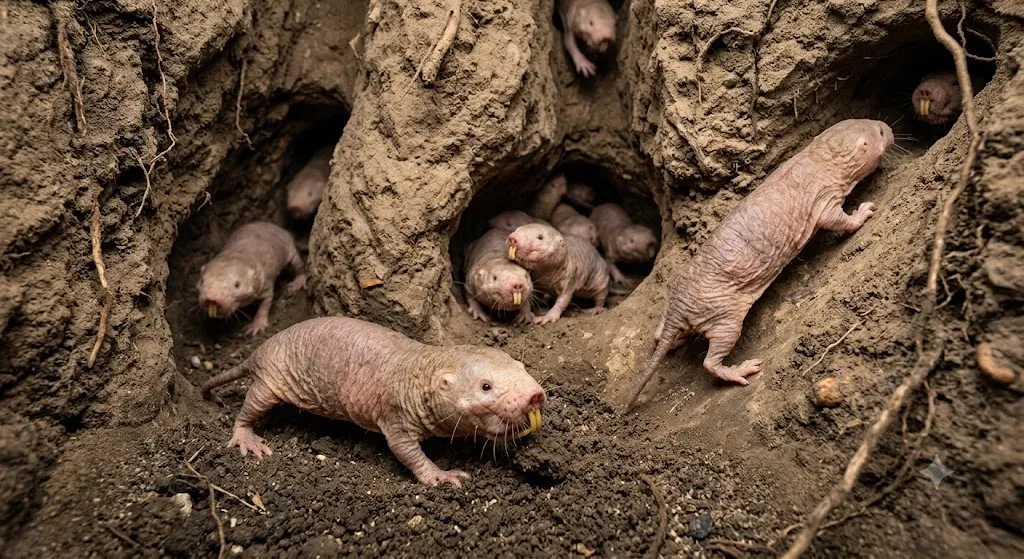
What makes researchers particularly interested in this animal is its apparent resistance to cancer and its unusually long lifespan for a rodent its size, living up to three decades compared to the one or two years typical of similarly sized rodents. It also has an unusual tolerance for low-oxygen environments and barely feels certain types of pain that would be agonizing to other mammals, a trait tied to specific differences in its nervous system.
The Mantis Shrimp: Underrated and Dangerously Fast
The mantis shrimp is not actually a shrimp in the traditional sense, and calling it strange almost undersells it. Some species deliver a punch with specialized club-like appendages that accelerates faster than a bullet leaves a gun barrel, fast enough to shatter aquarium glass and strong enough to crack open the shells of crabs and mollusks with a single strike.
The strike happens so quickly that it creates a phenomenon called cavitation, where the rapid movement of water briefly forms a vacuum bubble that collapses with enough force and heat to produce a tiny flash of light. In effect, the mantis shrimp is hitting its prey twice: once with the physical strike, and again with the shockwave from the collapsing bubble.
Its eyes are just as remarkable. Mantis shrimp have some of the most complex visual systems in the animal kingdom, with many possessing far more types of color receptors than the human eye, along with the ability to detect polarized light, a form of perception humans cannot naturally experience at all.
Tardigrades: The Toughest Animals Alive
Tardigrades, often nicknamed water bears, are microscopic animals that look like chubby, eight-legged bears under a microscope. Despite their almost comically simple appearance, they are widely considered among the most durable animals on the planet.
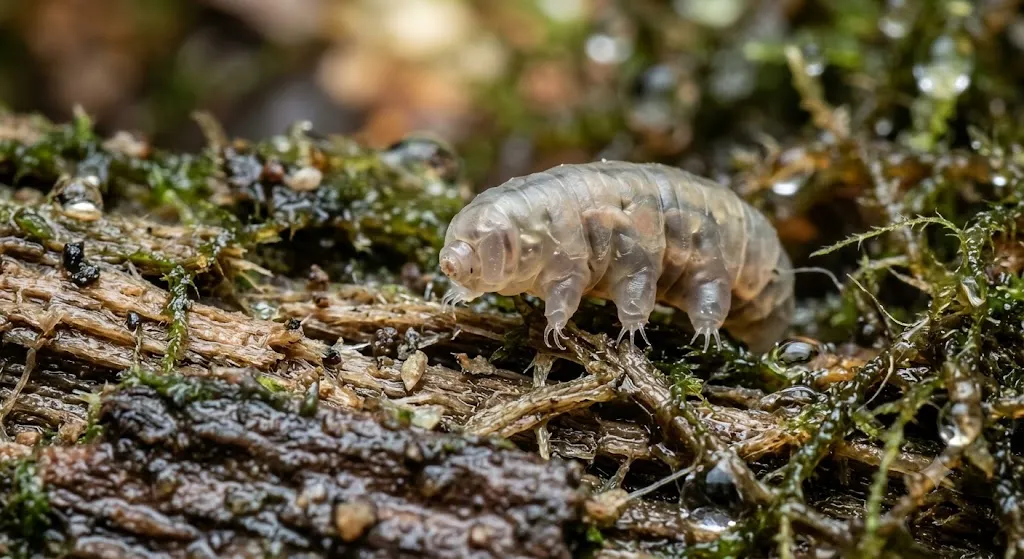
Tardigrades can survive being frozen to near absolute zero, boiled at extreme temperatures, dried out almost completely for years at a time, and exposed to radiation levels that would be lethal to nearly every other form of life. Some have even survived brief exposure to the vacuum of outer space during scientific experiments. They achieve this through a process where they essentially shut down their metabolism almost entirely, entering a dormant state until conditions improve enough for them to reactivate.
The Platypus: An Animal That Should Not Work, But Does
When European naturalists first encountered a platypus specimen, some reportedly assumed it was an elaborate hoax stitched together from parts of different animals. It is easy to see why. The platypus has a duck-like bill, a beaver-like tail, webbed feet, and, unlike almost every other mammal on Earth, it lays eggs instead of giving birth to live young.
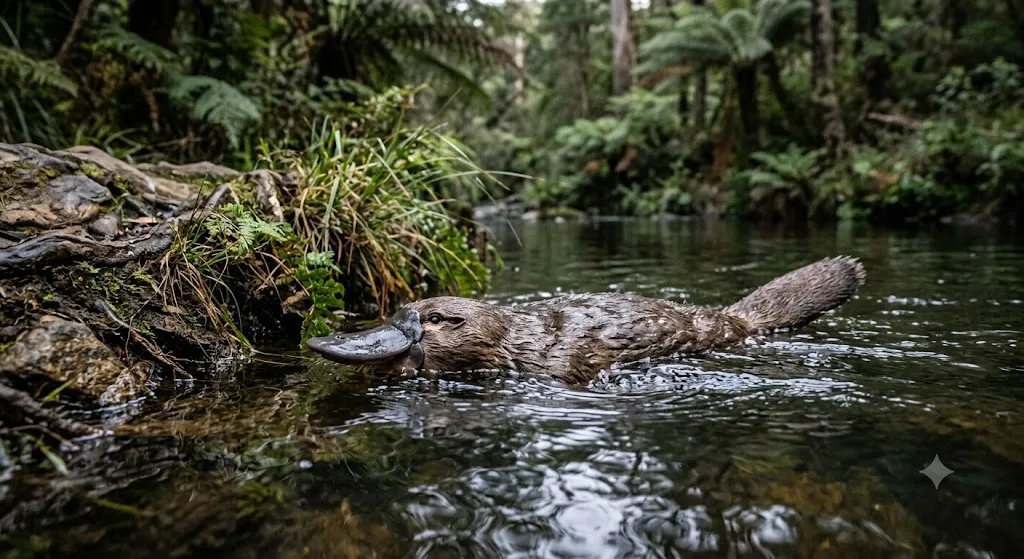
It gets stranger from there. Male platypuses have venomous spurs on their hind legs capable of delivering a painful sting, an extremely rare trait among mammals. The platypus also detects prey using electroreception, sensing the tiny electrical signals produced by the muscle contractions of prey hiding in murky water, a sense shared by very few other mammals.
The Star-Nosed Mole: Built Around a Bizarre Sensory Organ
The star-nosed mole has a nose ringed with 22 fleshy, tentacle-like appendages that give it one of the strangest faces in the animal kingdom. Those appendages are covered in an extraordinarily dense concentration of touch receptors, allowing the mole to identify and eat prey faster than the human eye can properly track, since it spends nearly all its time foraging underground or underwater in total darkness where sight is essentially useless.
Researchers studying this animal have found that it can identify whether something is edible and consume it in a fraction of a second, making it one of the fastest foragers among mammals despite, or perhaps because of, its near-total reliance on touch over sight.
Glass Frogs: See-Through by Design
Glass frogs, found in parts of Central and South America, have translucent skin on their undersides, revealing their internal organs, including a visibly beating heart, to anyone looking at them from below. Some species take this even further, with skin transparent enough that observers can watch blood actually moving through the frog’s circulatory system.
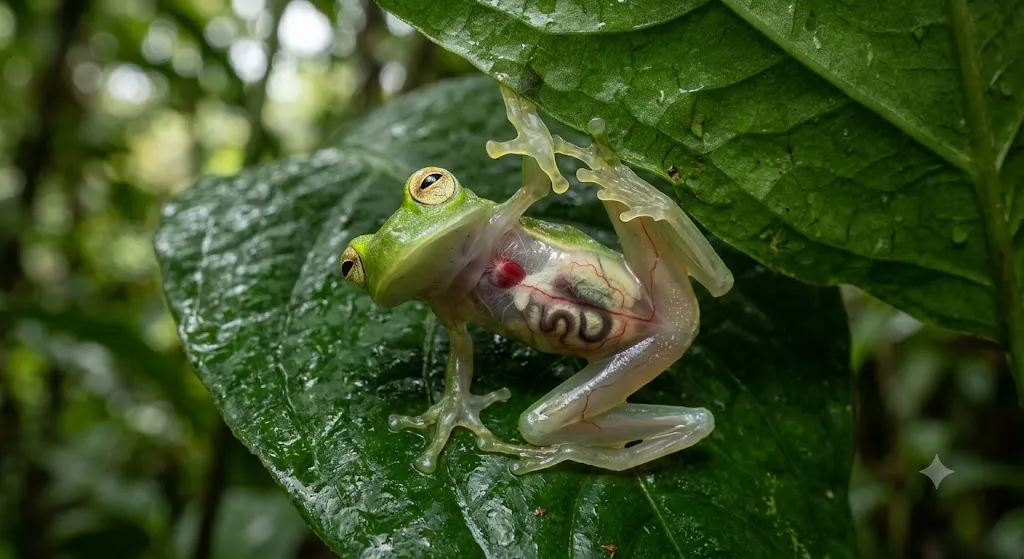
Recent research has shown that some glass frog species take this a step further while sleeping, essentially concentrating nearly all of their red blood cells into their liver and hiding them behind a reflective layer, making the frog appear even more transparent and harder for predators to spot during rest.
The Anglerfish: A Living Deep-Sea Trap
The anglerfish is one of the more instantly recognizable deep-sea creatures, largely thanks to the glowing lure that dangles from a modified spine above its head, used to attract curious prey close enough to strike. The light itself comes from bioluminescent bacteria living in a symbiotic relationship with the fish.
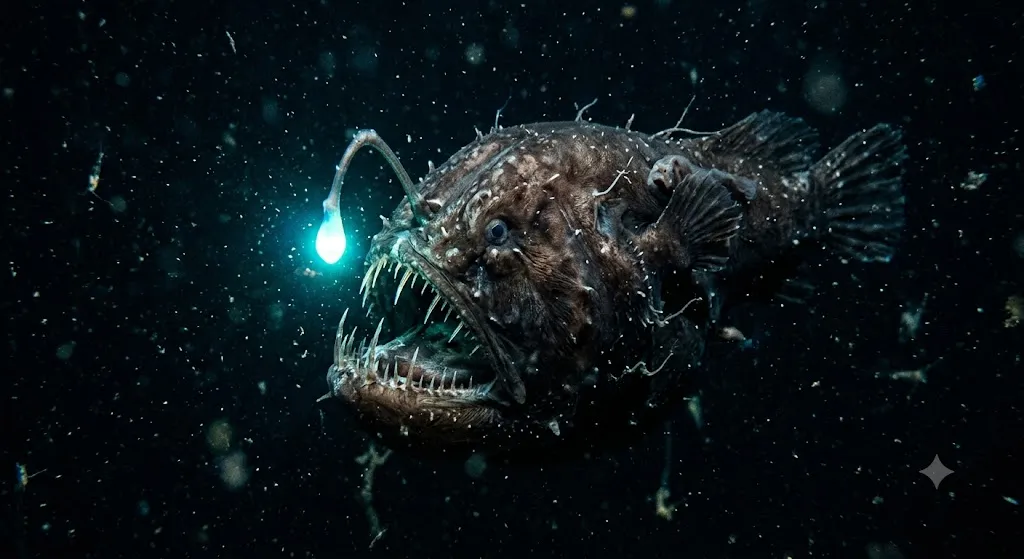
Even stranger is the reproductive strategy of many anglerfish species. In several species, the much smaller male permanently attaches himself to the larger female by biting into her body, eventually fusing with her tissue and blood supply, reducing himself to little more than a permanent source of sperm for the rest of his life. It is an extreme adaptation to the challenge of finding a mate in the vast, dark emptiness of the deep ocean.
The Shoebill: A Bird That Looks Prehistoric
The shoebill, found in swampy regions of central tropical Africa, stands nearly five feet tall and has an enormous, shoe-shaped bill capable of crushing prey as large as small crocodiles and monitor lizards. Its stillness while hunting is almost eerie, since it can stand motionless for extended stretches waiting for prey to surface, then strike with sudden, explosive speed.
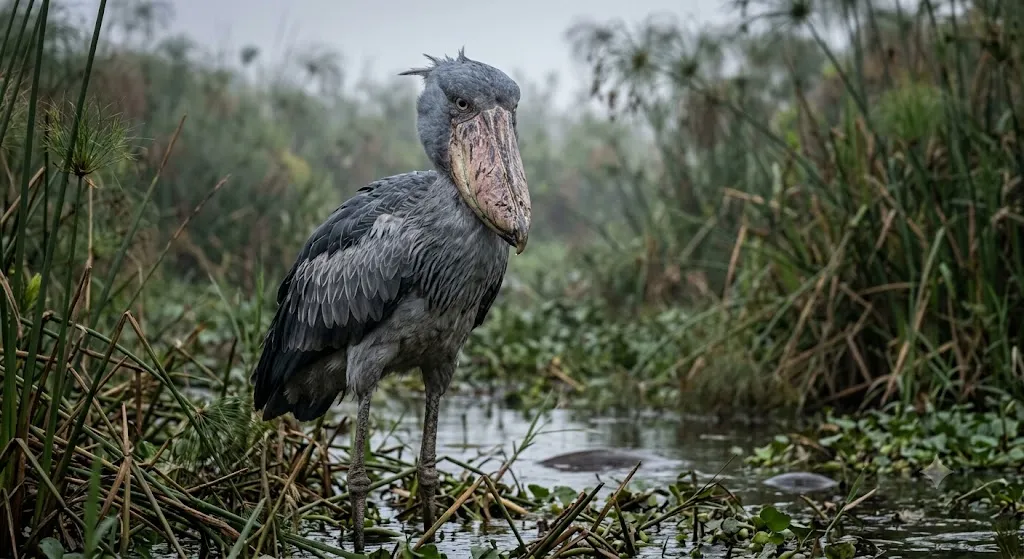
Its blank, unblinking stare and prehistoric silhouette have earned it a reputation online as one of the most bizarre-looking birds alive, and its lineage does trace back to ancient bird groups, giving it a genuinely dinosaur-like presence that photos do not always fully capture.
Why These Animals Matter Beyond the Novelty
It is easy to treat animals like these as internet curiosities, and plenty of them do rack up viral posts for exactly that reason. But the strangeness usually points to something genuinely valuable. The axolotl’s regeneration and the naked mole rat’s cancer resistance are both active areas of medical research. The mantis shrimp’s vision has influenced camera and sensor technology. Tardigrades are studied for insight into how life might survive in extreme environments, including potentially on other worlds.
Strange, in other words, is often just evolution’s way of solving a problem nobody else bothered to solve, using tools nobody else thought to try.
The Bottom Line
Earth’s strangest animals are not just oddities for internet lists. They are living proof of how varied and inventive evolution can be when a species finds itself facing an unusual environment or an unusual survival challenge. From regenerating limbs to venomous mammals to a bird with an almost dinosaur-like stare, these creatures are a reminder that the planet still holds plenty of surprises, even in an age when it can feel like everything has already been discovered and cataloged.